Why is the pipeline full but deals won't close?
Usually it's conversion and process, not lead volume. More lead generation rarely fixes it, because it adds more of the same deals to a pipeline that is already leaking. The leak tends to sit in weak qualification, stages that don't match how buyers buy, a CRM that doesn't reflect reality, or pricing that looks fine until late in the deal. A simple test helps. Ask four questions of every open deal: has the buyer described a real need in their own words, is there a credible fit, are you talking to someone who can say yes, and is there a next step with a date the buyer has agreed to? Any deal that fails one is a conversation, not pipeline. Then check your stages. A good stage is defined by something the buyer has done, not something your team has done. With both in place, you can see where deals stall and fix that before spending more on new leads.
- 0:00Not a lead problem
- 0:12Where deals leak
- 0:33A test for every deal
- 0:59Pipeline or conversation?
- 1:14Stages the buyer would recognise
- 1:41Find the stall
- 1:57Fix the leak first
Read the full transcript
A full pipeline that won't close is rarely a lead problem. It's usually conversion and process, and more leads rarely fix it.
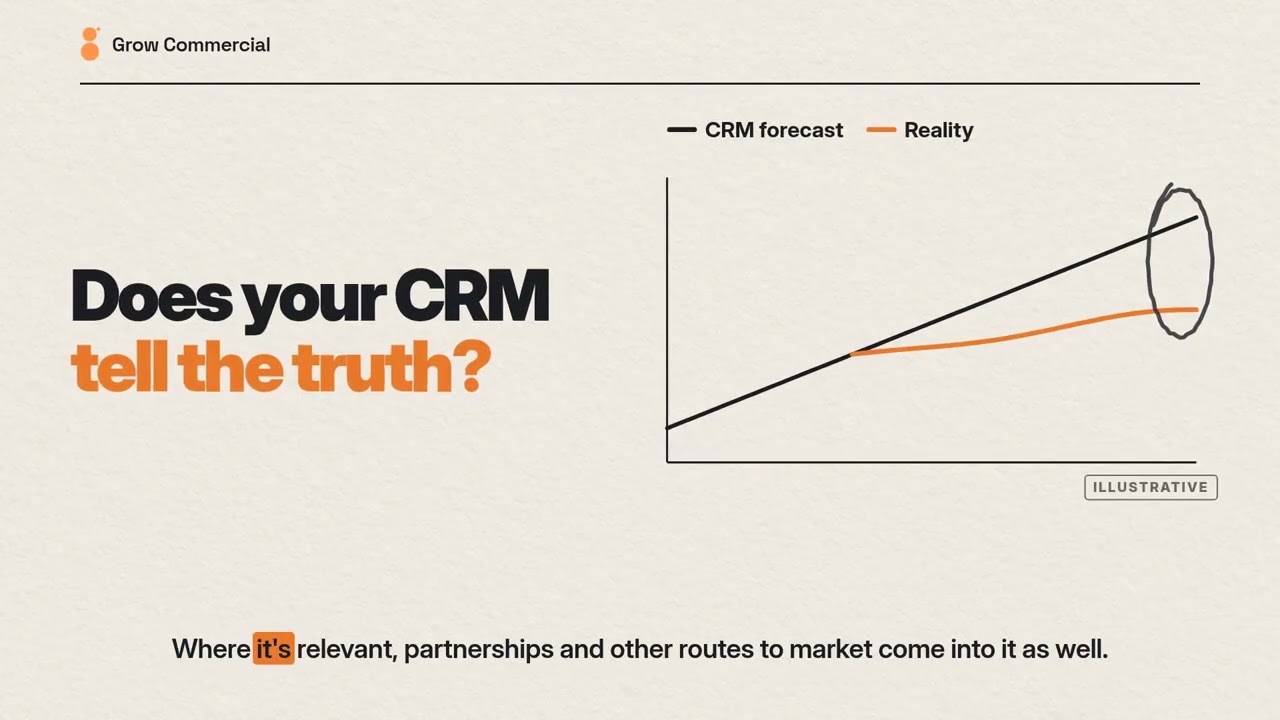
The leak tends to sit in a few familiar places. Deals that were never really qualified. Stages that follow your sales process rather than how the buyer buys. A CRM that doesn't reflect what's really happening. Or a price that looks fine until late in the deal.
Here's a test you can run on every open deal today. First, has the buyer told you about a real need, in their own words? Next, is there a credible fit with what you sell? Then, are you talking to someone who can actually say yes? And finally, is there a next step with a date, that the buyer has agreed to?
Any deal that fails one of those isn't really pipeline yet. It's an interesting conversation. Taking it out of the forecast feels painful, but it shows the real size of your pipeline.
Then look at your stages. A good stage is defined by something the buyer has done, like agreeing a trial or bringing in their finance lead. Not something your team has done, like sending a proposal. If a deal can move forward without the buyer doing anything, the stage is measuring your activity, not their intent.
Do those two things and you can usually see where deals stall, whether at qualification, in the middle, or at price. That tells you what to fix before you spend more on filling the top.
A smaller pipeline you can trust beats a big one you can't. Fix the leak first.
Want to talk this through for your business?
Related: The GTM diagnostic
Want to see how this works in your business?
Book a free 30-minute GTM call with the Grow team. We'll talk through where your commercial engine is getting stuck and what to look at first.