How do you build a sales forecast you can trust?
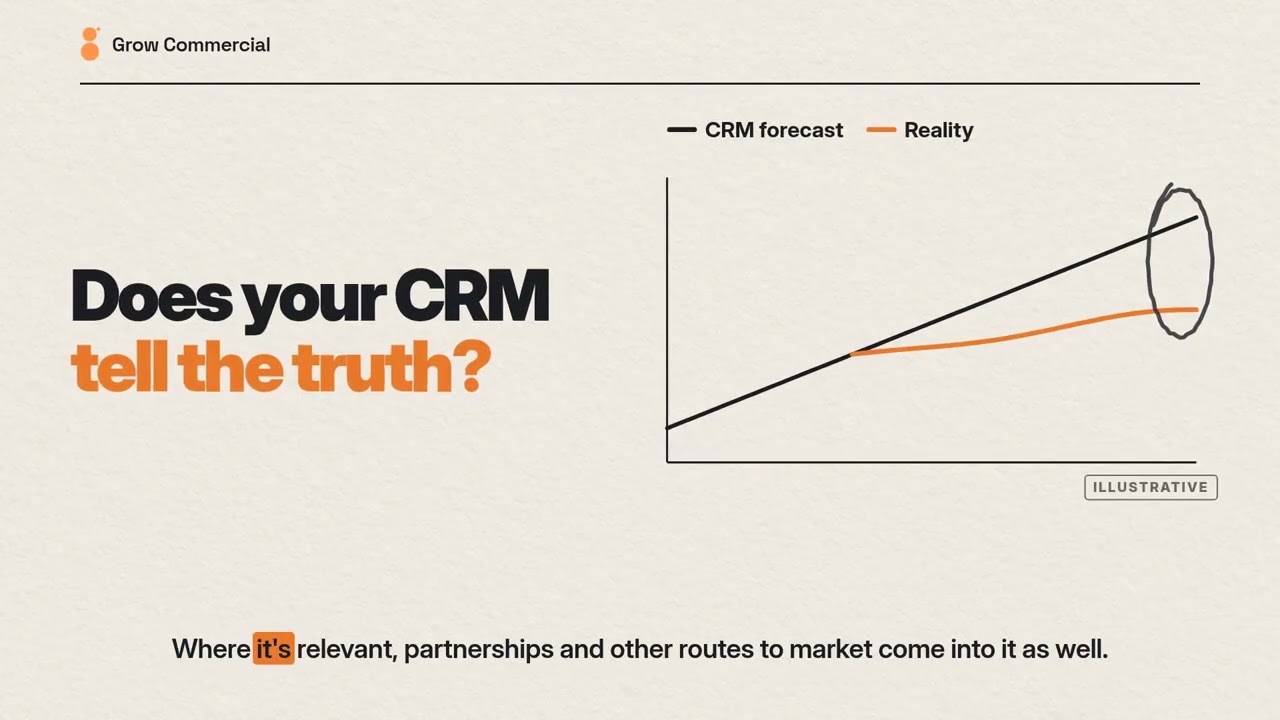
Build it on what buyers have done, not on how the team feels about a deal. Most forecast misses aren't a maths problem. Start with a look back. Put the forecast you made at the start of last quarter next to what actually closed, and for every deal that didn't land, note the stage it was in when you forecast it. If most misses sat at the same stage, that stage is too generous, because deals reach it before the buyer has committed to anything. Tie each stage to something the buyer has done, such as asking for a demo, agreeing a trial or bringing their finance lead onto a call. When you set the number, separate the deals you'd genuinely bet on, with someone who can say yes involved and a dated next step they've agreed, from deals that are only possible. Repeat the look back every quarter, so the forecast gets closer to what closes and holds up when your board or investors question it.
- 0:00Feeling or evidence
- 0:16Look back first
- 0:35Where it drifts
- 0:49Evidence at each stage
- 1:10Deals you'd bet on
- 1:31Every quarter
- 1:54Built on what buyers do
Read the full transcript
A sales forecast is only as good as the evidence behind each deal in it. When one misses, it's rarely the maths. It's built on how the team feels, not what the buyer has done.
Start by looking back. Take the forecast you made at the start of last quarter and put it next to what actually closed. For every deal you expected that didn't land, write down the stage it was sitting in when you forecast it.
If most of the misses were sitting at the same stage, that stage is too generous. Deals are reaching it before the buyer has really committed to anything, and it's flattering your numbers.
The fix is to tie each stage to something the buyer has done. A demo they asked for. A trial they agreed to. Their finance lead joining a call. Then a deal only moves forward when that evidence exists, not when the team feels good.
For the number itself, separate the deals you'd genuinely bet on from the ones that might come in. A deal you'd bet on has someone involved who can say yes, and a dated next step they've agreed. Everything else is possible, and should be shown that way.
Repeat the look back every quarter. You'll see whether the forecast is getting closer to what closes, and which stages still need tightening. That's also what a board or an investor wants to see. Not a perfect number, but one that holds up when they ask how you got it.
A forecast you can trust isn't optimistic or cautious. It's built on what buyers have done.
Want to talk this through for your business?
Related: The GTM diagnostic
Want to see how this works in your business?
Book a free 30-minute GTM call with the Grow team. We'll talk through where your commercial engine is getting stuck and what to look at first.